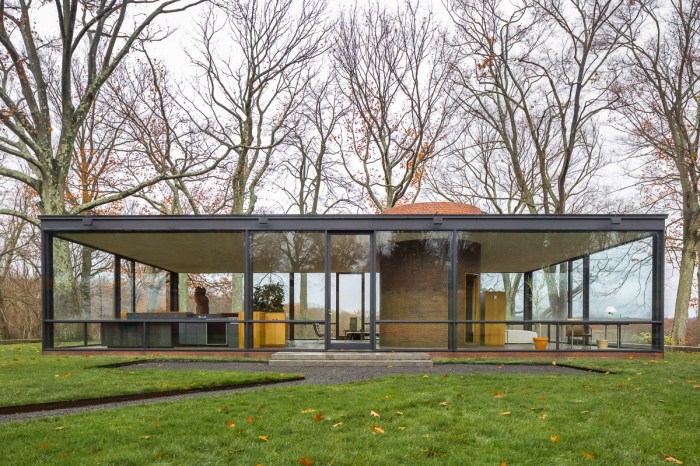
The Glass House by Philip Johnson stands as a masterpiece of modern architecture, captivating enthusiasts and novices alike with its innovative design and historical significance. This article delves into the intricate details of this iconic structure, shedding light on its construction, influence, and legacy.
As we unravel the layers of The Glass House, we uncover a narrative that intertwines creativity with functionality, setting the stage for a compelling exploration of one of the architectural wonders of the 20th century.
Overview of The Glass House by Philip Johnson
The Glass House, designed by architect Philip Johnson, is a prime example of modernist architecture that challenges traditional notions of shelter and space.
Architectural Design
The Glass House is a transparent structure consisting of a single room with floor-to-ceiling glass walls and a flat roof. The lack of interior walls creates an open space that blurs the boundaries between inside and outside, offering panoramic views of the surrounding landscape.
Historical Significance
- The Glass House, completed in 1949, is considered one of the first examples of modern domestic architecture in the United States.
- Its minimalist design and use of industrial materials such as steel and glass have influenced countless architects and designers, shaping the development of modern architecture.
- The Glass House is a symbol of architectural experimentation and innovation, representing a break from traditional architectural conventions.
Inspiration Behind Creation
Philip Johnson drew inspiration from the works of European modernist architects like Mies van der Rohe and Le Corbusier. He aimed to create a structure that would embody the principles of modernism, emphasizing simplicity, functionality, and the integration of architecture with nature.
Features of The Glass House
The Glass House, designed by Philip Johnson, is renowned for its unique features that set it apart from traditional architectural designs. Let's delve into the materials used, the prominent use of glass, and the layout and interior design of this iconic structure.
Materials Used in Constructing The Glass House
The Glass House is primarily constructed using steel and glass, with minimal solid walls. The steel framework provides support for the large glass panels that make up the walls and ceiling of the structure. This minimalist approach allows for uninterrupted views of the surrounding landscape and blurs the lines between indoor and outdoor spaces.
Use of Glass as the Primary Element
Glass plays a central role in the design of The Glass House, allowing natural light to flood the interior and creating a sense of openness. The transparency of the glass walls provides a seamless connection to the outdoors, making the surrounding nature an integral part of the living experience.
The reflective quality of the glass also adds a dynamic element to the structure, as it interacts with the changing light throughout the day.
Layout and Interior Design of The Glass House
The layout of The Glass House is characterized by an open floor plan, with minimal partitions and a central brick core that houses the fireplace and bathroom facilities. The interior is furnished with sleek and modern pieces that complement the simplicity of the architecture, creating a harmonious and elegant living space.
The strategic placement of furniture and artwork enhances the spatial experience and emphasizes the transparency of the glass walls.
Influence of The Glass House on Modern Architecture

The Glass House by Philip Johnson has had a profound impact on modern architecture, shaping trends and influencing designers around the world.
Architectural Trends
The Glass House revolutionized the concept of transparency in architecture, blurring the lines between indoor and outdoor spaces. This innovative approach has been widely adopted in contemporary architectural designs, with many architects incorporating glass elements to create a sense of openness and connection to the surroundings.
Comparison with Other Iconic Structures
When compared to other iconic architectural structures like Frank Lloyd Wright's Fallingwater or Le Corbusier's Villa Savoye, The Glass House stands out for its minimalist aesthetic and its emphasis on simplicity and transparency. While each of these structures has its own unique characteristics, The Glass House remains a symbol of modernist design and architectural innovation.
Legacy of Philip Johnson and The Glass House
Philip Johnson's legacy as an influential architect extends beyond The Glass House, as he continued to push boundaries and redefine architectural norms throughout his career. The Glass House itself remains a testament to Johnson's vision and has inspired countless architects to think outside the box and explore new possibilities in design.
The unique blend of modernist principles and innovative use of materials in The Glass House continues to be a source of inspiration for future generations of architects.
Visitor Experience and Tours
When visiting The Glass House, guests can expect a unique and immersive experience exploring Philip Johnson's iconic architectural masterpiece and its surrounding grounds. The tours offered provide a glimpse into the innovative design and historical significance of this landmark.
Tour Experience
Visitors can expect a guided tour of The Glass House, which includes access to the main house, its various rooms, and the striking glass walls that blur the lines between indoor and outdoor spaces. The tour also covers the Brick House, Da Monsta, the Sculpture Gallery, and the Pavilion, all showcasing Johnson's distinct style and vision.
What Visitors Can Expect to See
During the tour, guests will have the opportunity to admire the minimalist aesthetic of The Glass House, the carefully curated art collection, and the tranquil landscape that surrounds the property. The interplay of light and shadow, transparency, and reflection create a truly mesmerizing experience for visitors.
Cultural and Educational Value
Touring The Glass House offers a valuable educational experience, shedding light on modern architecture, design principles, and the evolution of architectural trends. Visitors gain insights into Johnson's innovative approach to space, form, and materiality, contributing to a deeper appreciation of architectural history and its impact on contemporary design.
Ending Remarks
In conclusion, The Glass House by Philip Johnson transcends mere architectural brilliance to embody a timeless symbol of innovation and inspiration. Its impact on modern architecture reverberates through time, inviting visitors to immerse themselves in a world where glass walls blur the lines between indoor and outdoor spaces, forever etching its place in architectural history.
Essential Questionnaire
What materials were used in constructing The Glass House?
The Glass House mainly consists of steel and glass, creating a seamless integration of modern materials in its design.
How has The Glass House influenced contemporary architectural trends?
The Glass House has pushed boundaries by showcasing the aesthetic and functional possibilities of using glass as a primary structural element, inspiring architects to experiment with transparency and light.
Can visitors tour The Glass House?
Yes, visitors can experience The Glass House through guided tours that offer insights into its design, history, and cultural significance.