Embark on a journey through the fascinating realm of hotel architecture, where every structure tells a unique story of design, innovation, and hospitality. From historical evolution to sustainable practices, this topic delves into the intricate details that shape the guest experience.
Hotel architecture stands as a testament to human creativity and ingenuity, blending form with function to create spaces that leave a lasting impression.
Overview of Hotel Architecture
Hotel architecture encompasses the design and layout of buildings specifically tailored for lodging and accommodation purposes. It involves the planning, construction, and aesthetic considerations of hotels, resorts, and other hospitality establishments.Architectural design plays a crucial role in the hospitality industry as it sets the tone and atmosphere for guests' experiences.
The layout, style, and functionality of a hotel can greatly impact the overall guest satisfaction, influencing factors such as comfort, convenience, and even emotional connection to the space.
Importance of Architectural Design in Hospitality
- Architectural design helps create a unique identity for a hotel, setting it apart from competitors and attracting guests.
- The layout and flow of a hotel can enhance guest experience by providing easy navigation, accessibility, and a sense of luxury.
- Architectural features such as natural lighting, open spaces, and views can contribute to a relaxing and inviting environment for guests.
- Well-designed hotels can optimize operational efficiency, from check-in processes to room cleaning and maintenance.
Influence of Hotel Architecture on Guest Experiences
- Guests often form their first impressions based on the architecture and design of a hotel, affecting their overall perception of the establishment.
- The design elements can evoke different emotions and moods, creating a memorable and enjoyable stay for guests.
- Functional and aesthetically pleasing spaces can enhance guest comfort and satisfaction, leading to positive reviews and repeat visits.
- Architectural innovations, such as eco-friendly features or smart technology integration, can showcase a hotel's commitment to sustainability and innovation.
Historical Evolution
Hotel architecture has evolved significantly over different time periods, reflecting the changing needs and tastes of society. From humble accommodations to extravagant luxury resorts, the design of hotels has been influenced by various architectural styles and historical events.
Ancient Times
In ancient times, travelers sought shelter in basic inns or guesthouses along popular trade routes. These early establishments were simple in design, focusing on providing a safe place to rest and refresh. Examples include the caravanserais along the Silk Road, which featured central courtyards for travelers to gather.
Medieval and Renaissance Period
During the medieval and Renaissance periods, the concept of hospitality expanded, leading to the development of more elaborate inns and taverns. These establishments often featured timber-framed structures and intricate decorations, catering to the needs of pilgrims and merchants. The coaching inns of Europe are prime examples of this period, with their grand facades and spacious interiors.
19th Century and Industrial Revolution
The 19th century saw the rise of grand hotels in major cities, influenced by the industrial revolution and the growing tourism industry. These hotels boasted ornate facades, luxurious interiors, and cutting-edge amenities, catering to the elite class. The Ritz Hotel in Paris, designed by architect Charles Mewes, set a new standard for luxury accommodation during this period.
20th Century and Modernism
In the 20th century, the modernist movement revolutionized hotel architecture, emphasizing functionality, simplicity, and minimalism. Architects like Le Corbusier and Ludwig Mies van der Rohe introduced innovative designs that focused on clean lines and open spaces. The Farnsworth House and Villa Savoye are iconic examples of modernist architecture that have influenced hotel design worldwide.
Contemporary Trends
Today, hotel architecture continues to evolve, incorporating elements of sustainability, technology, and cultural influences. Green building practices, smart room features, and themed designs are becoming more prevalent in the hospitality industry. The Burj Al Arab in Dubai, with its sail-shaped silhouette, and the Marina Bay Sands in Singapore, with its iconic rooftop infinity pool, are examples of contemporary hotels pushing the boundaries of architectural innovation.
Key Elements of Hotel Architecture
When it comes to designing a hotel, there are several key elements that architects consider to create a functional and aesthetically pleasing space.
Role of Natural Light
Natural light plays a crucial role in hotel architecture as it can enhance the overall ambiance and create a sense of warmth and openness. Architects often strategically place windows, skylights, and glass walls to maximize natural light penetration throughout the hotel.
Significance of Spatial Planning and Layout
Spatial planning and layout are essential in hotel design to ensure optimal flow and functionality of the space. Architects carefully plan the arrangement of rooms, corridors, and common areas to create a seamless and comfortable experience for guests. The layout also takes into consideration privacy, noise control, and accessibility.
Sustainable Practices in Hotel Architecture
Implementing sustainable practices in hotel architecture has become increasingly important in the modern world. Green technologies and eco-friendly designs are being integrated into hotel construction to reduce environmental impact and promote sustainability.
Green Design Principles
- Utilization of renewable energy sources such as solar panels and geothermal systems.
- Efficient water management strategies like rainwater harvesting and greywater recycling.
- Use of sustainable materials like bamboo, recycled wood, and low VOC paints.
- Incorporation of natural lighting and ventilation to minimize energy consumption.
Integration of Green Technologies
- Installation of energy-efficient HVAC systems and LED lighting to reduce energy usage.
- Implementation of smart building automation systems for optimal energy management.
- Utilization of green roofs and living walls for thermal insulation and biodiversity enhancement.
Examples of Eco-friendly Hotels
- 1. The Park Hyderabad, India: Known for its sustainable design featuring solar panels, rainwater harvesting, and energy-efficient systems.
- 2. The Bardessono, California: LEED Platinum certified hotel with geothermal heating, solar power, and eco-friendly materials.
- 3. Six Senses Con Dao, Vietnam: Incorporates recycled materials, energy-efficient lighting, and sustainable water management practices.
Iconic Hotel Buildings
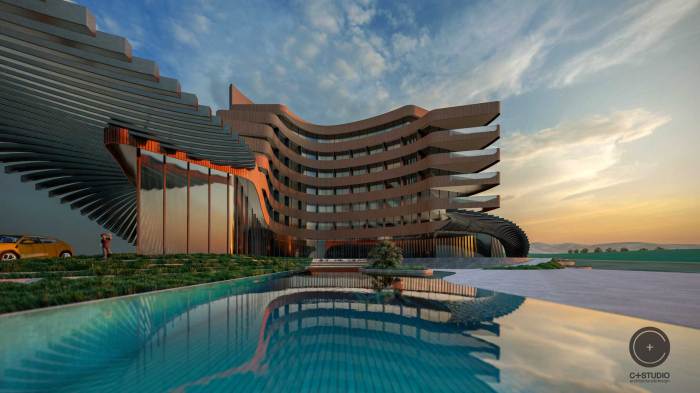
When it comes to iconic hotel buildings, there are several renowned establishments around the world that have made a mark with their architectural significance. These hotels have not only become landmarks in their respective cities but also stand out for their unique design and features.
Famous Iconic Hotels
- The Burj Al Arab in Dubai: Known for its sail-shaped structure and luxurious amenities, this hotel has become a symbol of modern architecture in the Middle East.
- The Ritz Paris: With its classic Parisian architecture and opulent interiors, this hotel has been a favorite among celebrities and dignitaries for decades.
- The Marina Bay Sands in Singapore: Featuring a stunning rooftop infinity pool and three towers connected by a sky park, this hotel has redefined the skyline of Singapore.
Architectural Features
- Unique Silhouettes: Iconic hotels often have distinctive shapes or silhouettes that make them instantly recognizable, such as the pyramid of the Luxor Hotel in Las Vegas.
- Innovative Materials: From glass facades to sustainable materials, these buildings showcase cutting-edge architectural techniques and materials.
- Integration with Surroundings: Many iconic hotels blend seamlessly with their surroundings, whether it's a historic district or a modern city skyline.
Last Recap
In conclusion, hotel architecture is not just about buildings; it's about creating memorable experiences for guests, blending aesthetics with functionality to redefine luxury and comfort. As we continue to witness new trends and innovations in this field, one thing remains certain - the impact of architectural design on the hospitality industry is truly profound.
Quick FAQs
What does hotel architecture encompass?
Hotel architecture encompasses the design and structural planning of buildings in the hospitality industry, focusing on creating spaces that cater to the needs and comfort of guests.
How does hotel architecture influence guest experiences?
Hotel architecture plays a crucial role in shaping guest experiences by creating a welcoming ambiance, facilitating smooth navigation, and providing aesthetically pleasing surroundings.
What are some key elements of hotel architecture?
Key elements of hotel architecture include spatial planning, natural light integration, sustainable design practices, and the strategic layout of spaces to enhance guest comfort and convenience.
Why is sustainable architecture important in the hotel industry?
Sustainable architecture in hotels helps reduce environmental impact, lower operating costs, and appeal to eco-conscious guests, showcasing a commitment to responsible practices.
Can you give examples of iconic hotel buildings known for their architecture?
Iconic hotel buildings like the Burj Al Arab in Dubai, the Marina Bay Sands in Singapore, and the Taj Mahal Palace in Mumbai are renowned for their architectural brilliance and have become landmarks in their respective cities.